
If you run a restaurant in Palm Desert, you already know the market is unforgiving. The Coachella Valley draws serious diners — tourists dropping real money during festival season, snowbirds who eat out four nights a week from October through April, and locals who have more options than they know what to do with. The competition is real, and it doesn’t stop at the dining room.
It extends to Google.
Most restaurant owners either ignore SEO entirely or throw money at it without understanding what they’re paying for. This post is about neither. It’s about what’s actually moving the needle for Palm Desert restaurants in 2026 — specific, practical, and grounded in how local search actually works today.
Why Restaurant SEO in the Coachella Valley Is Different
National SEO advice is mostly useless for a Palm Desert restaurant. You’re not competing with chains in Chicago. You’re competing with the place across El Paseo, the new spot that just opened in La Quinta, and the hotel restaurant three blocks away with a generous marketing budget.
Local SEO is a different game. The signals that matter here are proximity, reviews, Google Business Profile completeness, and the degree to which Google trusts that your restaurant is what it says it is — and that real customers show up and have real experiences worth telling people about.
Here’s what’s working right now.
1. Your Google Business Profile Is Your Most Important Marketing Asset
Not your website. Not your Instagram. Your Google Business Profile.
When someone in a car searches “restaurants near me” or “best Italian in Palm Desert,” what shows up first is the map pack — three listings with photos, ratings, hours, and a click-to-call button. That real estate is worth more than any paid ad, and it’s driven almost entirely by your GBP.
What most restaurants get wrong: they claim the profile, add basic info, and never touch it again. That’s not enough.
Keep your hours obsessively accurate: Holiday hours, Coachella weekend hours, summer hours — Google penalizes inconsistency between your profile hours and your actual operation. If someone shows up and you’re closed, that’s a signal Google picks up on through suggested edits from users, and it erodes your ranking.
Post to your GBP regularly. The posts feature is underused by almost every restaurant in the Valley. A weekly photo of a seasonal dish, a weekend special, or a note about a live music night keeps the profile fresh and signals to Google that the business is active. This is a direct ranking factor.
Use the Q and A section proactively. You can ask and answer your own questions. “Do you take reservations?” “Is there parking?” “Do you have a gluten-free menu?” Seed the Q and A with the questions your customers actually ask. It surfaces in search results and reduces friction for new guests.
Build a photo library that actually represents your food. Blurry phone photos of dishes in bad lighting are worse than no photos at all. Your top competitors on El Paseo and in Old Town La Quinta are investing in food photography. If your profile photos look amateur, customers — and Google’s engagement signals — will reflect that.
2. Reviews Are a Ranking Signal, Not Just a Reputation Tool
This is the one that most restaurants understand emotionally but don’t treat strategically.
Google uses the volume, recency, and quality of your reviews as a local ranking signal. A restaurant with 300 reviews averaging 4.4 stars will outrank a restaurant with 40 reviews averaging 4.8 stars in most cases, because volume signals real-world traffic and legitimacy.
Ask at the right moment. The best time to ask for a review is right after a positive interaction — a compliment to the server, a returned plate scraped clean, a guest mentioning it’s their anniversary and everything was perfect. Train your front-of-house staff to recognize those moments and have a frictionless ask ready. “We’d love it if you left us a Google review — it really helps us out” is enough.
Use QR codes to your review link at the table. Not on a receipt — on a small card or table tent. Remove every possible step between the intention to leave a review and the act of doing it.
Respond to every review, including the bad ones. Google tracks response rate. A restaurant that responds to reviews — thoughtfully, without being defensive — signals active management to both Google and prospective diners. The way you handle a negative review in public is marketing.
Never buy or incentivize reviews. Beyond being a Google policy violation, it’s detectable and it will hurt you.
3. On-Page SEO: Your Website Needs to Say What You Are, Where You Are
Most restaurant websites are pretty and useless from an SEO standpoint. They have a beautiful homepage, a PDF menu that Google can’t read, and no signal to Google about what kind of food they serve or where they’re located.
Your title tag should include your cuisine type and location. Not just “Coppertini’s” — “Coppertini’s: Italian Restaurant in Palm Desert, CA.” Every page title should reflect what Google needs to understand about you.
Your homepage copy should include natural geographic language. Phrases like “serving Palm Desert, Rancho Mirage, and Indian Wells” or “located in the heart of El Paseo” aren’t just good for humans — they’re signals for Google’s local index.
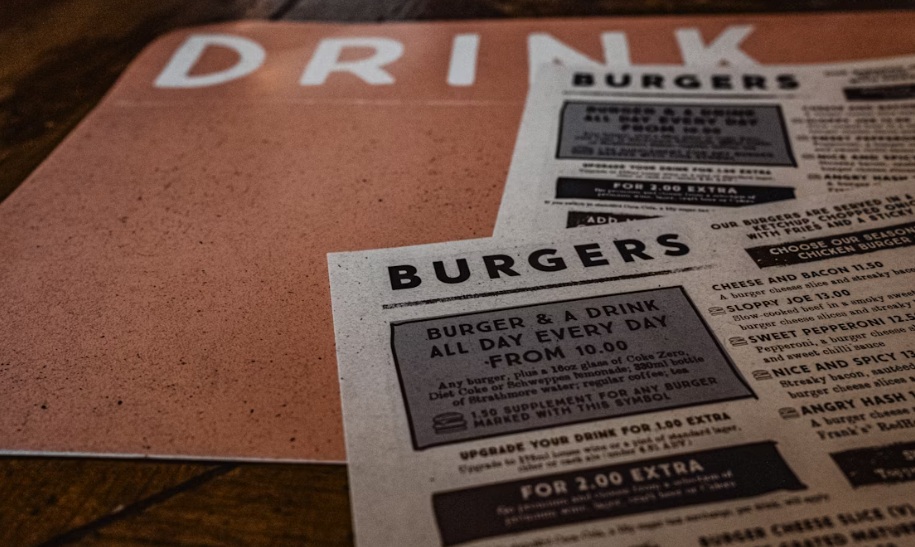
Your menu needs to be in HTML, not a PDF. Google can’t index a PDF menu the way it can index a properly coded page. If your menu lives in a PDF, you’re leaving keyword real estate on the table. Dishes, ingredients, dietary accommodations — all of that is content Google can use to understand what you offer and serve your listing to people searching for it.
Create a dedicated page for private dining, events, or catering if you offer it. “Private dining Palm Desert” and “event space Coachella Valley” are searchable queries with real intent behind them. If you offer it and don’t have a page for it, someone else will get that search.
4. Local Citations: The Unsexy Work That Matters
A local citation is any online mention of your restaurant’s name, address, and phone number — and consistency across all of them is a ranking signal.
Yelp, TripAdvisor, OpenTable, the Desert Sun dining section, the Palm Desert Chamber directory, Apple Maps, Bing Places — every platform where your restaurant exists needs to show the same name, address, and phone number. A slight variation — suite number missing here, old phone number there — creates inconsistency that erodes Google’s confidence in your listing.
Audit your citations once a year. It takes a few hours and it’s worth it.
5. Think Seasonally, Because Your Market Is Seasonal
This is specific to the Coachella Valley and most SEO consultants from outside the area will miss it.
Your market has two distinct audiences on two distinct timelines: the winter and spring snowbird and festival crowd from October through April, and the year-round local. Your content strategy, your GBP posting calendar, and your promotional timing should reflect this.
Before Coachella and Stagecoach weekends: update your GBP with festival weekend hours, post about your proximity to the venue, and consider a landing page targeting “restaurants near Coachella” or “where to eat during Stagecoach.” These are high-intent searches from travelers who have money and are actively planning.
In the summer slowdown: focus on locals. Content about happy hour specials, locals-only discounts, and summer menu changes keeps your profile active and maintains your ranking through the slow months so you’re in top position when October arrives.
The Honest Bottom Line
Restaurant SEO in Palm Desert isn’t complicated, but it requires consistency. The restaurants dominating local search right now aren’t winning because they have bigger budgets — they’re winning because they’ve done the fundamentals right and kept at them.
A complete and active Google Business Profile. A steady stream of real reviews. A website Google can actually read. Consistent citation data. Content that reflects how your market actually moves.
Get those things right and the map pack becomes a real option. Ignore them and you’re relying entirely on word of mouth and whoever happens to walk by.
If you want a free audit of your restaurant’s current local search presence, reach out. We’ll tell you exactly where you stand and what it would take to move the needle