Most articles about experiential marketing read like a highlight reel you’ll never be in. Nike builds a five-story basketball court in New York. Airbnb recreates a house from a Pixar movie. Netflix drops a Squid Game activation on the Champs-Élysées.
Great examples. Completely inaccessible if you run a restaurant in Palm Desert or a boutique hotel in Rancho Mirage.
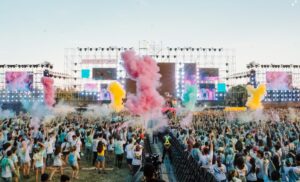
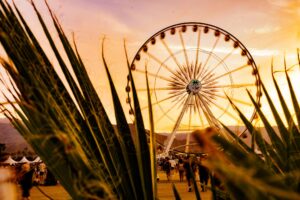
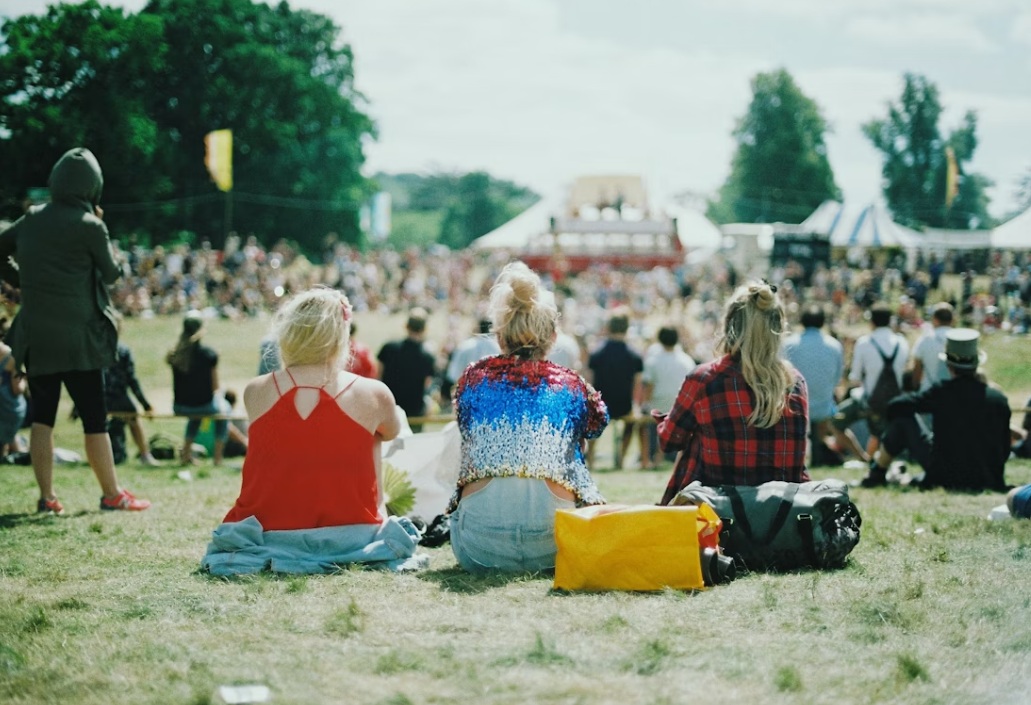
Here’s the thing: the principles behind those campaigns are entirely accessible. The budgets aren’t — but the strategy is. And if you’re in the Coachella Valley or anywhere in the greater SoCal market, you already sit inside one of the most experiential-marketing-rich environments on the planet. Every April, 125,000 people per weekend descend on this desert looking for exactly the kind of moments brands spend millions manufacturing elsewhere.
You don’t have to outspend Nike. You have to outthink your competition. Here’s how.
What Is Experiential Marketing, Actually?
Experiential marketing is any marketing strategy designed to create a direct, memorable, in-person (or immersive) interaction between a brand and its audience — rather than broadcasting a message at them.
Where traditional advertising talks to people, experiential marketing puts people inside the story.
It takes several forms:
- Brand activations — interactive installations or pop-ups tied to an event or moment
- Pop-up experiences — temporary, themed physical environments designed to generate engagement and UGC
- Product sampling and demos — letting people experience the product, not just hear about it
- Guerrilla marketing — unexpected, high-impact placements in public spaces
- Community events — branded gatherings that build loyalty through shared experience
The data backing this approach is not subtle. Global experiential marketing spend hit a record $128.35 billion in 2024, surpassing pre-pandemic levels for the first time — and 84% of consumer marketers plan to increase event spending in 2026. Kande Meanwhile, 85% of consumers say they are more likely to buy from a brand after participating in an experiential marketing event, and the same percentage say they would recommend the brand to others. WinSavvy
That’s not a niche tactic. That’s the highest-converting channel most local businesses aren’t using.
5 Experiential Marketing Examples Worth Studying
These aren’t just “cool campaign” listicle fodder. Each one has a transferable principle worth extracting.
1. Coachella Brand Activations: The Art of the Photo-Worthy Moment
Every major brand that activates at Coachella — American Express, Revolve, H&M, YouTube — is after the same thing: a physical environment so visually compelling that attendees photograph and share it without being asked.
The Revolve Festival is the textbook case. An invite-only event running parallel to Coachella, it creates artificial scarcity (not everyone gets in) while generating massive earned media from the influencers who do. The brand doesn’t need to buy ads — the guests become the distribution channel.
What local businesses can steal: You don’t need a full festival footprint. A single photo-worthy element — a neon sign, a branded mirror installation, a visually distinct corner of your space — can trigger the same UGC loop at a fraction of the cost. If someone can photograph themselves with it and it looks good on Instagram, you’ve built a free marketing asset.
2. CeraVe x Michael Cera: Leaning Into What People Already Think
CeraVe’s 2024 Super Bowl campaign began weeks before the game — with paparazzi shots of Michael Cera carrying bags of CeraVe through Brooklyn, influencer content showing him signing bottles, and a fake denial from the brand on Instagram. The name similarity had already been a long-running internet joke, and CeraVe simply leaned into existing organic sentiment rather than manufacturing something new. Snapbar
What local businesses can steal: What do people already say about your business? What’s the joke, the reputation, the thing regulars always mention? Build a campaign around that existing sentiment instead of fighting it or ignoring it. Authenticity converts. Manufactured cleverness usually doesn’t.
3. Spotify Wrapped: Turning Data Into a Shared Experience
Spotify’s 2024 Wrapped campaign featured large-scale projections across NYC and LA celebrating hyperlocal streaming trends — including a 262-foot projection on the Domino Sugar Factory in Brooklyn. The personalized year-in-review cards generated billions of social shares because users weren’t just sharing data; they were sharing identity. Snapbar
What local businesses can steal: This one scales beautifully for small businesses. End-of-year recap posts (“Our most popular dish of 2025,” “The most common question we got this year,” “Your top requested service”), neighborhood shoutouts, and personalized loyalty milestones all follow the same psychology. People share things that reflect who they are. Give them something that does that.
4. Pop-Up Shops and Temporary Experiences
Pop-up retail is one of the most scalable experiential formats because the temporary nature is the hook. Pop-ups are among the most common brand activation strategies, with 36% of brands investing in them. G2 The limited run creates urgency. The physical presence creates discovery. And the novelty drives social sharing that a permanent location never generates.
For Coachella Valley businesses specifically, pop-up positioning during festival season, Stagecoach, tennis tournaments, or the winter snowbird months represents one of the highest-leverage windows available anywhere in the SoCal region. Visitors from LA, Orange County, and San Diego are here, they’re primed to spend, and they’re actively looking for content-worthy experiences.
What local businesses can steal: You don’t need a separate storefront. A dedicated event night, a seasonal menu concept with a hard end date, or a one-weekend-only collaboration with another local brand all trigger the same behavioral drivers — urgency, novelty, and shareability.
5. Local Event Geo-Targeting + In-Person Experience Combo
This is the strategy that ties everything together — and it’s where digital and experiential marketing genuinely intersect for local businesses.
Brands that win during large events don’t just show up. They run geo-targeted ads to people physically near the venue, they optimize their Google Business Profile with event-specific updates, and they have something worth experiencing when those visitors walk through the door. The digital layer drives discovery. The in-person experience drives conversion and social amplification.
Why Experiential Marketing Works: The Psychology Behind It
Understanding why this works makes it easier to build campaigns that actually land.
Memory formation is faster from experience than from text. Design-led, in-person interactions begin forming memories in under a second — text-heavy content takes five times as long. The implication for marketers: the faster you can get someone to feel something, the more durable the impression.
Shared experiences build identity. 78% of millennials prefer spending money on experiences over material goods. Seeker People don’t just want what you sell — they want what choosing you says about them. An experience gives them a story to tell.
UGC is the compounding return. 98% of consumers create digital or social content at experiences and events, with 96% of millennials sharing photos and videos online Kande — creating earned media that outlasts the activation itself. Every share extends your reach without extending your budget.

How to Apply This as a Local Business in the Coachella Valley
You don’t need a six-figure activation budget. You need three things:
1. A moment worth documenting. What happens at your business that people would photograph or share unprompted? If the answer is “nothing yet,” that’s the gap. It could be a product presentation, a design element, a ritual, a staff interaction, or a view. Find the moment and design around it.
2. A digital layer that drives discovery before they arrive. Geo-targeted ads during peak event weekends, updated Google Business Profile posts tied to what’s happening in the Valley, and social content that shows the experience rather than describing it. This is where your paid strategy and experiential strategy connect.
3. A follow-up mechanism. After launching an experiential event, one entrepreneur saw Instagram engagement rise 30% and newsletter signups nearly quadruple within a month. Tecna The event is the spark — email capture, review requests, and retargeting ads are how you extend the return beyond the moment itself.
The Takeaway
Experiential marketing examples from major brands are worth studying — not to replicate them, but to extract the principle underneath. The photo-worthy moment. The leaned-into reputation. The urgent, temporary offer. The personalized data made shareable.
Every one of those strategies works at the scale of a local restaurant, boutique, spa, hotel, or service business. The Coachella Valley, in particular, sits inside a seasonal marketing window that most local businesses dramatically underutilize.
The question isn’t whether experiential marketing applies to your business. It’s whether you’re intentional enough about designing the experience your customers are already having.
If you’re thinking about how to connect your in-person presence to a smarter digital strategy — paid search, local SEO, social amplification — that’s exactly what we help local businesses build. Reach out and let’s talk.