
What Coachella Can Teach Every Marketer About Attention, Experience, and Culture
Every April, the Coachella Valley Music and Arts Festival transforms the desert into one of the most powerful real-world marketing ecosystems on the planet.
And yet, most marketers look at it the wrong way.
They see influencers, outfits, and viral moments. What they should be seeing is a live case study in attention economics, brand positioning, experiential design, and cultural relevance — all playing out in real time.
Strip away the music and Coachella is essentially a masterclass in modern marketing. Here are the lessons most brands overlook, and how to actually apply them.

1. Attention Is the Product — Not the Event
At its core, Coachella isn’t selling tickets. It’s selling attention at scale. Millions of people attend in person — but the majority of engagement happens outside the festival grounds. People don’t just experience Coachella. They document it, share it, and amplify it.
The takeaway: Your product or service is no longer the end goal. Attention is.
If your marketing doesn’t create moments worth sharing, encourage user-generated content, or extend beyond the initial interaction — you’re leaving exponential reach on the table.
Try this: Design campaigns backward from shareability. Ask yourself: Would someone post this without being asked? If the answer is no, rethink it.
2. Experience Beats Messaging Every Time
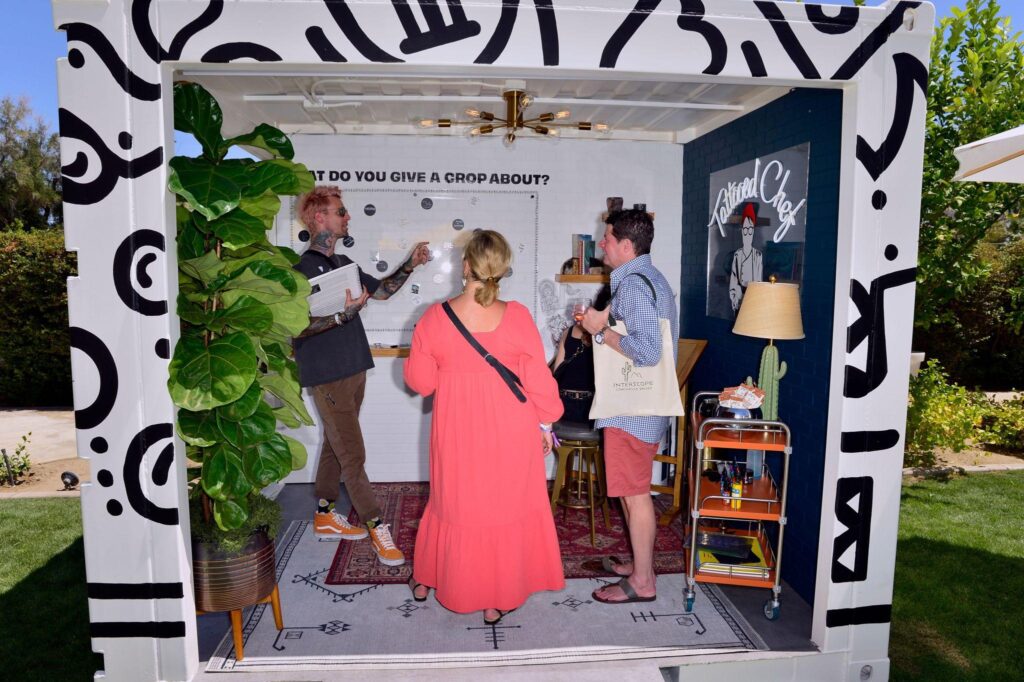
Walk through Coachella and you’ll notice something fast — brands aren’t pushing messages. They’re building experiences. There’s no “buy now” copy or feature-heavy product explanations. There are immersive installations, interactive pop-ups, and photo-worthy environments.
Why? Because experience drives emotion, and emotion drives memory.
Most websites and landing pages fail here. They over-explain, overload with text, and under-deliver on experience.
Try this: Audit your landing page with one question: Does it feel like something, or does it just say things? If it doesn’t create an emotional response within five seconds, your conversion rate will reflect that.
3. Influencers Are Distribution, Not Strategy
Coachella is associated with influencers — but the brands that win don’t just hire influencers. They build something worth showcasing, then let influencers amplify it. That’s a meaningful difference.
- Bad approach: “Let’s pay influencers to talk about us.”
- Better approach: “Let’s create something so compelling influencers want to talk about it.”
If the underlying experience or product is weak, no amount of influencer spend will fix it.
Try this: Before any influencer investment, ask whether there’s a moment worth sharing — a visual hook, a genuine experience, something with inherent pull. Fix that first.

4. Scarcity and Exclusivity Drive Demand
Not everyone gets access to the best Coachella experiences. VIP areas, invite-only brand activations, private events — and the result? Demand spikes. Even people who aren’t there feel like they’re missing out.
Most brands do the opposite: unlimited access, no urgency, no exclusivity. The result is lower perceived value and slower decision-making.
Try this: Introduce controlled scarcity into your funnel — limited-time offers, exclusive content tiers, or early access. Make people feel like they’re getting in, not just buying.
5. Visual Identity Is Your First Conversion Step
At Coachella, brands don’t just show up — they show up visually distinct. Bold colors, unique structures, branded environments. Everything is designed to stand out, be photographed, and be instantly recognizable.
In a scroll-heavy world, visual differentiation happens before anyone reads a word.
Try this: Ask whether someone would recognize your content without your logo on it. Does your design stop the scroll? If not, you may have a branding problem — not a traffic problem.
6. Culture Outlasts Campaigns
Coachella works because it sits at the intersection of music, fashion, social identity, and lifestyle. Brands that succeed there align with that culture — they don’t fight it.
Most brands try to create attention from scratch. The smarter move is attaching yourself to where attention already exists.
Try this: Identify the conversations already happening in your space and ask how your brand can contribute meaningfully. Don’t interrupt — integrate.
7. The Funnel Is Now a Loop
At Coachella, there’s no clean top-to-bottom funnel. Someone might see a post, follow a brand, visit a site, and convert weeks later. Awareness, engagement, and conversion all overlap.
Modern marketing works the same way. Touchpoints stack — social, website, email, word of mouth — and they rarely fire in sequence.
Try this: Stop optimizing channels in isolation. Instead, ask how your touchpoints reinforce each other and whether you’re creating a consistent experience across all of them.
8. People Want to Be Part of Something
At its core, Coachella isn’t about music. It’s about identity, belonging, and shared experience. People go because it says something about who they are.
The strongest brands operate the same way. They don’t just have customers — they have participants.
Try this: Shift your messaging from what we do to what you become by choosing us.
The Takeaway
Coachella works because it’s bold. It doesn’t play it safe, blend in, or over-optimize for short-term metrics. It invests in experience, culture, shareability, and emotional connection — and generates massive, compounding attention as a result.
The quick version:
- Design for attention, not just conversion
- Build experiences, not just messaging
- Use influencers as distribution, not strategy
- Leverage scarcity to signal value
- Invest in visual identity that stops the scroll
- Plug into culture — don’t ignore it
- Think beyond the linear funnel
- Create a sense of belonging
Marketing is no longer just about being seen. It’s about being remembered, shared, and talked about. Few places demonstrate that better than Coachella.