Most guerrilla marketing examples you’ll find online share a familiar lineup: Red Bull drops a man from space. IKEA converts a subway station into a living room. Coca-Cola builds a “Happiness Machine” on a college campus.
They’re brilliant. They’re also completely inaccessible to the restaurant owner on El Paseo, the boutique hotel in Palm Springs, or the wealth management firm whose clients are driving in from Newport Beach for a long weekend.
Here’s the truth about guerrilla marketing: these campaigns deliver an average ROI of 4.5 to 5 times their initial cost — while cutting marketing budgets by up to 90% compared to traditional channels. Persuasion Nation The principle behind every one of those famous campaigns is entirely scalable. You don’t need Red Bull’s budget. You need Red Bull’s mindset.
This post breaks down what guerrilla marketing actually is, which recent examples are worth studying, and — most importantly — how local businesses in the Coachella Valley and greater SoCal market can apply the same thinking right now.
What Is Guerrilla Marketing?
Guerrilla marketing is a promotional strategy built around surprise, creativity, and unconventional placement rather than media spend. The term was coined by Jay Conrad Levinson in 1984, borrowed from military strategy: smaller forces winning against larger ones by being faster, smarter, and less predictable.
In marketing terms, that translates to: do something people don’t expect, in a place they don’t expect it, and make it impossible not to share.
The four main types are worth knowing:
- Street marketing — live activations, stunts, or installations in public spaces
- Ambush marketing — inserting your brand into an event you didn’t officially sponsor
- Viral/digital guerrilla — online campaigns engineered for shareability and organic spread
- Experiential pop-ups — temporary physical environments designed to generate discovery and UGC
What makes all of them work is the same underlying psychology: organic word-of-mouth is five times more effective than paid advertising, and 50% of Gen Z and Millennials trust peer recommendations and user-generated content more than branded content. LICERA Guerrilla marketing is how you engineer word-of-mouth at scale.
5 Guerrilla Marketing Examples Worth Stealing From
1. Duolingo at the Charli XCX Concert: The Art of the Ambush
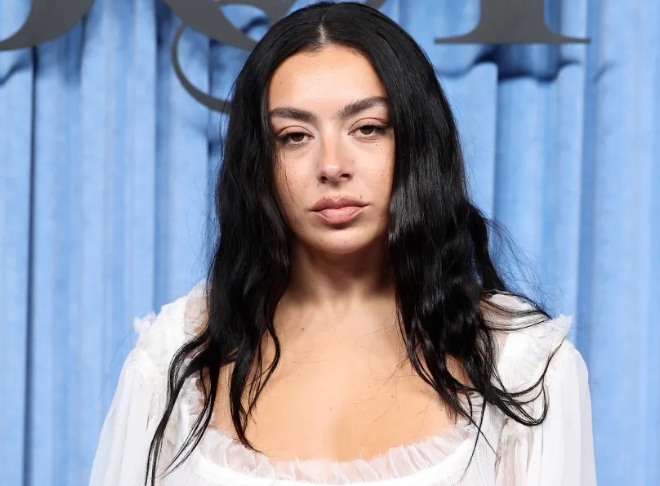
In September 2024, a small group of Duolingo employees — 20+ strong — wearing green owl mascot heads showed up at the opening night of Charli XCX’s Sweat Tour in Detroit. The owls wore Brat shirts. One got kicked out. Then more appeared. The stunt generated over 20 million impressions, with TikTok videos racking up millions of views — and Charli XCX herself acknowledged the owls during the show. Total cost: concert tickets. YouScan
This is textbook ambush marketing — inserting your brand into someone else’s cultural moment so naturally that nobody minds, and the media picks it up anyway.
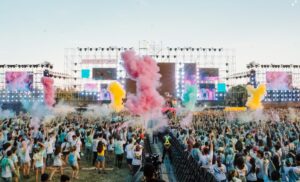
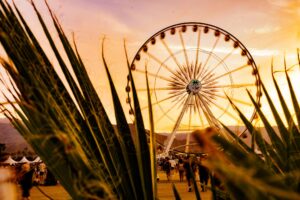
Local application: Coachella and Stagecoach together bring 250,000+ people into the Valley across two weekends. You don’t need to be an official sponsor. A branded presence near the action — a chalk mural on the walking route, a pop-up hydration station, a coordinated street team with something visual and memorable — costs a fraction of sponsorship and can generate the same conversation.
2. Graza’s “Missing” Poster Campaign: Low Tech, High Recall
Olive oil brand Graza promoted their new potato chips by putting up lost-pet-style “missing” flyers on city streets — designed to look like lost pet posters, but for “EXTRA VIRGIN OLIVE OIL POTATO CHIPS Missing Since March 2024.” Tear-off tabs had QR codes linking to their newsletter. No tech. No influencer budget. Just paper, wheat paste, and street art sensibility. Shopify
The genius here isn’t the production value. It’s the subverted expectation. You’ve seen a thousand “lost cat” posters. You’ve never seen one for potato chips. That gap between expectation and reality is exactly what stops people mid-stride — and makes them pull out their phone.
Local application: Think about what your business could “lose” in a way that’s locally resonant. A spa in Rancho Mirage losing its “last available Sunday appointment.” A wine bar on Palm Canyon losing the perfect pour. The format is free. The concept is what matters. Add a QR code to a landing page and you’ve turned a piece of paper into a lead gen tool.
3. Billie Eilish’s Close Friends Stunt: Perceived Exclusivity at Zero Cost
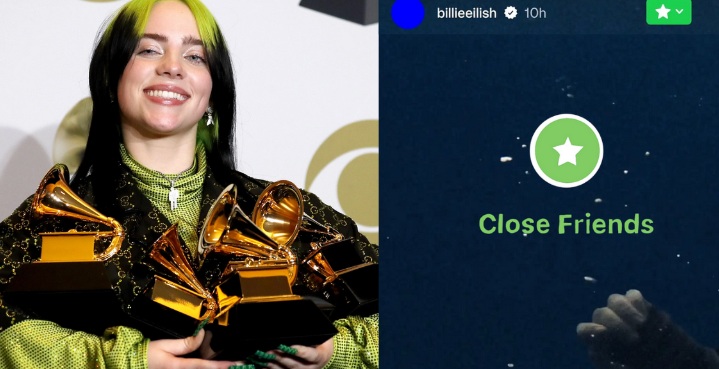
In April 2024, Billie Eilish added all 110 million of her Instagram followers to her Close Friends list — normally reserved for an actual inner circle. Fans thought they’d been personally chosen. The stunt gained her 10 million new followers and helped make “Birds of a Feather” Spotify’s most-streamed song of 2024. Cost: zero. She toggled a feature nobody had thought to subvert. YouScan
What made this work wasn’t technology. It was the feeling of being let in. Exclusivity — real or manufactured — triggers a powerful psychological response, especially for high-net-worth and aspirational audiences.
Local application: For businesses serving affluent visitors from LA, Orange County, or San Diego, exclusivity is a massive lever. A private tasting for email subscribers before a new menu launches. A “locals only” preview night. An invitation-only experience during Modernism Week or the BNP Paribas Open. The platform barely matters. The feeling of being on the inside does all the work.
4. Nike’s Olympic Ambush: How to Win Without Paying to Play
Nike is not an official sponsor of the Paris 2024 Olympics, but the brand capitalized on the event by wrapping a building in the center of Paris with an enormous advertisement featuring French soccer star Kylian Mbappé. Shopify The result: Nike received as much or more brand association with the Olympics as many official sponsors — at a fraction of the cost.
The lesson isn’t to be a freeloader. It’s that proximity to a major moment has enormous value, and you don’t always have to pay the gate fee to benefit from the crowd.
Local application: The Coachella Valley hosts the BNP Paribas Open (one of the largest tennis tournaments in the world), Coachella, Stagecoach, Modernism Week, and a consistent influx of LA/OC/SD visitors year-round. None of these require official sponsorship to benefit from proximity. Event-timed offers, geo-targeted ads to visitors in the area, and in-store callouts acknowledging what’s happening that weekend are all legitimate, low-cost ways to ride event traffic.
5. A24’s Marty Supreme Launch: Earned Media Over Paid Media
For the Christmas 2025 release of Marty Supreme, A24 and Timothée Chalamet started with an 18-minute “leaked” video of Chalamet pitching absurd promo ideas to A24’s marketing team — then actually executed them. YouScan The campaign generated weeks of organic speculation, social conversation, and press coverage before the film opened — effectively turning promotional content into entertainment content.
The principle: make your marketing interesting enough to be its own story, and the media does the distribution for you.
Local application: What’s the behind-the-scenes story at your business that people would actually watch? A restaurant kitchen prep video that’s genuinely funny. A hotel showing the actual process of setting up for a major event weekend. A retailer “leaking” an upcoming collection in a way that feels like insider access. Authenticity beats production value. And the businesses already sitting inside the most documented desert landscape in California have a natural visual backdrop that most brands would pay for.
What All of These Have in Common
Every one of these campaigns — across wildly different budgets and industries — shares the same DNA:
- Unexpectedness: They break the pattern of what people expect in that moment or space
- Shareability: They hand people a reason to take out their phone and post
- Low production dependence: The idea does the heavy lifting, not the execution budget
- Cultural fit: They lean into something the audience already cares about rather than manufacturing attention from scratch
72% of marketers report that non-traditional marketing tactics drive higher engagement than standard digital ads. LICERA The data isn’t the surprise. The surprise is how few local businesses actually act on it.
Making It Work in the Coachella Valley
The Coachella Valley has something most markets don’t: a built-in seasonal wave of high-spending, socially active visitors from some of the most affluent zip codes in the country. The people coming in from Brentwood, Newport Coast, and La Jolla for a festival weekend, a tennis tournament, or a winter escape are exactly the audience guerrilla marketing is designed to reach — people who are already in an experience mindset, already primed to document and share, and already predisposed to spend on something memorable.
You don’t need a national campaign. You need a well-timed, well-placed idea that earns its own attention.
The businesses that figure that out first — before the market gets noisier — will have built a brand that advertising budgets alone can’t replicate.
If you want to think through how guerrilla tactics connect to a broader digital strategy — paid search, local SEO, social amplification — that’s the kind of integrated work we do for Coachella Valley businesses. Let’s talk.